
Becoming a Tattoo Artist: Apprenticeship, Requirements, and First Equipment
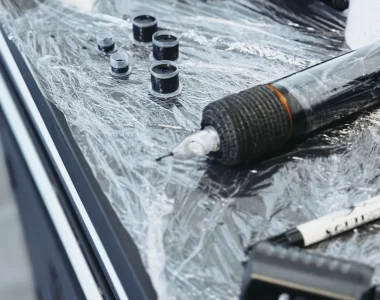
Do you want to get into tattooing?
- Learning the trade
- Understanding the obligations
- Choosing your first gear
- Access Solutat via an apprenticeship
Can you become a tattoo artist without a diploma?
Yes. In France, there is no mandatory state-recognized qualification for learning the trade of a tattoo artist.
However, this does not mean that one can tattoo someone without adhering to a regulatory framework. Learning the trade and having the right to practice are two different things.
To perform tattooing involving skin penetration on a person, one must notably comply with regulatory health requirements, including hygiene and safety training and the procedures associated with starting the business.
Learning to draw, understanding the machine, refining one’s linework, or practicing on suitable materials are therefore all part of the learning process. Practicing on human skin, however, takes place within a regulated framework.
Key takeaways:
No diploma is required to learn tattooing. However, there are obligations that must be met before practicing professionally on a person.
What is it like to be a tattoo apprentice?
In the tattooing world, the word "apprentice" is often used to refer to someone who is gradually learning the trade from a more experienced tattoo artist.
However, this does not necessarily involve learning in the academic or administrative sense of the term. There is no single path, with a mandatory diploma and a fixed duration.
Depending on the situation, learning can take place in a studio, under the guidance of a mentor, through private training, or with several professionals over time.
What matters most is gradually acquiring the artistic, technical, and health-related fundamentals before practicing on human skin.
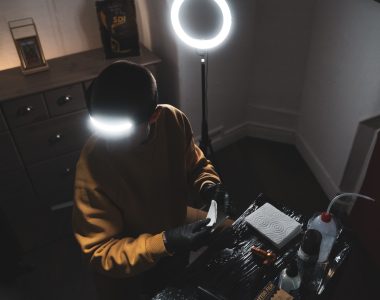
Learning in a tattoo studio
It is one of the most classic paths: observing how a studio operates, understanding the organization of the workspace, hygiene protocols, client relations, and—gradually—the technical aspects.
At first, this may involve a great deal of observation, drawing, and practice on suitable surfaces—even before considering tattooing a person.
Being guided by an experienced tattoo artist
Guidance from an experienced tattoo artist provides an outside perspective on one’s progress, allows for faster correction of certain errors, and fosters a better understanding of the realities of the profession.
This can involve the design, the choice of equipment, machine settings, workstation organization, and technical movements, as well as the habit of working neatly and methodically.
The goal is not to replicate exactly how someone else does things, but to gradually build your own practice on a solid foundation.
Private schools and training programs
Il existe aujourd’hui des écoles et des formations privées consacrées au tatouage. Elles peuvent permettre de découvrir certaines bases techniques, de mieux comprendre le matériel ou d’être encadré·e dans ses premiers exercices.
However, not all training courses are created equal, and their duration can vary significantly. A short course cannot replace the experience gained over time through the practice of drawing, observation, and fieldwork guidance.
Before signing up, it is therefore useful to look closely at the curriculum, the duration, the instructors' experience, and what is actually being taught.
Can you teach yourself to tattoo?
It is possible to work on certain fundamentals on your own: drawing, composition, line consistency, knowledge of equipment, or practice on synthetic skin.
However, learning entirely on one’s own quickly has its limits. Certain errors regarding technique, settings, hygiene, or organization can be difficult to spot without an outside perspective.
Receiving guidance—even just occasionally—from an experienced tattoo artist often helps you progress faster and avoid picking up bad habits right from the start.
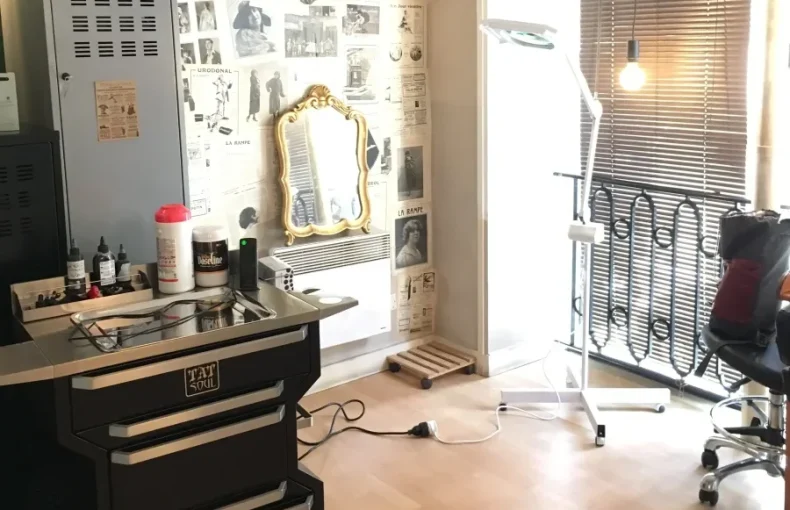
How do you find an apprenticeship with a tattoo artist?
Finding a tattoo apprenticeship can take time. Studios often receive a large number of inquiries, and not all of them have the capacity—or the desire—to mentor a beginner.
To stack the odds in your favor, it is best to arrive having done some genuine personal work, to demonstrate your motivation, and to understand that you are not simply looking for someone to teach you how to use a machine.
Building a portfolio before looking for an apprenticeship
Your portfolio allows you to showcase your artistic style, consistency, creativity, and—above all—your drawing ability.
It doesn’t need to be filled exclusively with tattoo designs. What matters is showing that you know how to observe, construct an image, and work with volume, lines, and contrast, as well as develop a visual identity.
A cohesive and personal portfolio will often be far more interesting than a collection of copied or reproduced drawings.
How to contact a studio
Avoid overly vague messages like "Hi, do you take on apprentices?" A studio will be more inclined to consider your inquiry if you show that you are familiar with their work and briefly explain why you are contacting them.
Simply introduce yourself, explain where you are in your journey, and attach or offer to show your portfolio. The goal isn’t to tell your whole life story, but to make the tattoo artist want to see your work.
A personalized, polite, and concise request will generally have more impact than a message sent indiscriminately to fifty studios.
What a tattoo artist might look for in a beginner
When a tattoo artist agrees to work with someone, drawing ability is not the only criterion.
Consistency, the ability to listen, to accept corrections, to work seriously, and to remain patient also count for a great deal. Learning requires time, repetition, and sometimes doing the same thing over and over again before making progress.
The artistic universe also matters. It is not necessarily a matter of having a perfectly defined style already, but rather of demonstrating genuine personal exploration and a desire to develop one’s own work.
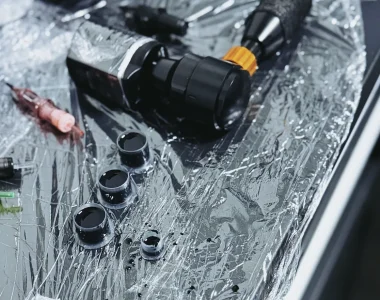
How long does it take to learn tattooing?
There is no universal timeframe for learning how to tattoo.
Some people make rapid progress in certain technical areas, while others need more time. Drawing ability, frequency of practice, the quality of guidance, and consistency play a major role.
Above all, it is essential to distinguish between knowing how to use a machine and truly mastering the craft. Being able to complete a few practice exercises does not mean you are ready to work on human skin independently.
Learning to tattoo therefore takes place over time, involving practice, corrections, observation, and a great deal of repetition.
What are the requirements for becoming a tattoo artist in France?
Learning to tattoo is one thing. Practicing on human skin in a professional setting is another.
In France, the practice of tattooing—which involves breaching the skin—is governed by specific health regulations. Before tattooing clients, it is therefore essential to be familiar with the requirements regarding training, activity registration, workplace hygiene, and the management of equipment.
Hygiene and Sanitation Training
Hygiene and sanitation training is mandatory for professionals who perform tattooing involving skin penetration.
It is not designed to teach the art of tattooing. Its objective is to convey essential health and safety protocols: preventing infection risks, hand hygiene, workstation setup, cleaning and disinfection, and the management of equipment and waste.
Following the regulatory changes introduced by the order of March 5, 2024, this training course is part of a certification scheme subject to specific validity and renewal requirements.
Declaration of activity
Before commencing operations, the activity of tattooing involving skin penetration must be declared to the relevant Regional Health Agency.
This declaration makes it possible to identify the professional and the location where the activity is carried out. It is one of the steps to be taken before receiving clients in a professional setting.
Depending on the situation—whether in a studio, as a guest practitioner, at an off-site location, or practicing across multiple facilities—the required procedures may vary. You should therefore always check the applicable requirements with the relevant Regional Health Agency (ARS).
Hygiene rules and the practice location
Tattooing involving skin penetration must be performed under conditions that minimize the risk of contamination.
This concerns, in particular, the organization of the workstation, hand hygiene, equipment protection, the cleaning and disinfection of surfaces, and the use of equipment suited to each stage of the session.
The premises where the activity takes place must also allow for compliance with these rules. Depending on the layout of the studio or facility, certain requirements may vary; it is therefore advisable to check the applicable conditions with the relevant Regional Health Agency (ARS) before starting operations.
Infectious clinical waste (DASRI), single-use equipment, and waste
Tattooing generates waste, not all of which can be disposed of with ordinary waste.
Needles, cartridges, blades, and other sharp or piercing items must be disposed of via an appropriate waste management channel. Waste soiled or contaminated during a session must also be sorted and disposed of in accordance with the regulations applicable to infectious healthcare waste (DASRI).
Conversely, uncontaminated packaging or protective materials can be disposed of via standard waste or recycling channels, depending on their nature.
The goal is not to overcomplicate things right from the start, but to understand that a tattoo setup revolves around more than just the machine; managing the equipment used and the waste generated is also part of the professional fundamentals.
Key takeaways
Learning to tattoo and having the right to practice on human skin are two different things.
When should you buy your first tattoo equipment?
It's not necessarily useful to buy all of your material right from the start.
When starting out, you don't always know yet which machine will suit you best—what weight you prefer, what ergonomics, what type of stroke, or even what equipment truly matches your way of working.
Initially, the goal is primarily to understand how the equipment works, practice using suitable materials, and gradually identify what is truly needed.
Buying gradually also helps avoid spending a lot of money on equipment that will ultimately be replaced a few months later.
Should you buy all your tattoo equipment brand new when starting out?
Not necessarily.
When starting out, you are still discovering your preferences, your working style, and the type of equipment that truly suits you. Buying everything brand new right away can therefore represent a significant investment in gear that you might end up replacing quite quickly.
Some équipements They can easily have a second life if they are in good condition and suitable for professional use—for example, machines, power supplies, armrests, lamps, or certain items of furniture.
However, saving money should never come at the expense of...hygièneEverything intended for single use, sterile, or directly linked to health safety must be selected with much greater vigilance.
Equipment that can have a second life
A tattoo machine, power supply, lamp, armrest, or certain durable accessories can be good options to buy second-hand—especially when you are starting to build your kit without breaking the bank.
The important thing is to check the condition of the equipment, its operation, its compatibility with your installation, and its maintenance.
What is best bought new
Needles, cartridges, gloves, caps, single-use protective items, and other consumables intended for use during a session must be purchased new and under conditions that guarantee their conformity and integrity.
For products related to hygiene, disinfection, or skin preparation, it is also important to prioritize products suited to the intended use and to adhere to the conditions for their storage and use.
The idea is simple: buying second-hand can be a good option for durable equipment, but not for items where safety depends on them being new, sterile, or single-use.
Key takeaways
"Pre-owned" never means compromising on hygiene.
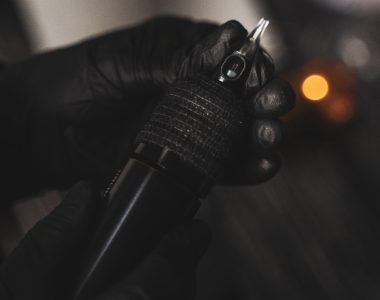
Which first tattoo machine should you choose?
There is no single “right” first tattoo machine.
The right choice depends on several factors: your budget, the machine's weight, its ergonomics, the type of grip, the stroke length, the work style you want to develop, and the equipment you are already using for practice.
At first, it can be tempting to buy the exact machine your mentor uses or the one you see most often on social media. But what works perfectly for someone else won’t necessarily be the right fit for you.
The ideal approach, therefore, is to compare options, test them out whenever possible, and avoid immediately overinvesting in a high-end model before you really know your preferences.
Factors to consider before buying
Pay particular attention to the weight, grip diameter, stroke length, battery life (if the machine is battery-operated), compatibility with the cartridges you’ll be using, and ease of maintenance.
These details may seem secondary at first, but they directly influence working comfort and the feel in the hand.
Should you buy a beginner tattoo kit?
A beginner tattoo kit might seem convenient because it bundles everything together: machine, power supply, cartridges, accessories, and sometimes synthetic skin.
But it is not necessarily the best solution for everyone.
Kits sometimes contain very basic gear or items you’ll rarely use. Conversely, building your equipment gradually allows you to choose each piece based on your actual needs and your progress.
If you are being mentored by a tattoo artist, it can also be helpful to ask for advice before buying, so you avoid spending money on equipment you will end up replacing very quickly.
Key takeaways
Sometimes it is better to buy less, but choose equipment that aligns with your learning process.
What budget should you plan for starting out in tattooing?
There is no single budget for getting started with tattooing.
The cost depends on the equipment you choose, what you already own, how you learn, and—above all—how quickly you decide to get fully equipped.
Initially, it is often more practical to break down expenses into several categories rather than purchasing everything at once: training equipment, machines and supplies, consumables, hygiene and safety training, and—at a later stage—workstation equipment.
Buying certain durable equipment second-hand can significantly reduce the initial investment, especially while you don't yet know exactly which gear will suit you in the long run.
The main expenses to anticipate:
- tattoo machine
- Mains power or battery, depending on the model
- suitable cartridges or needles
- synthetic skin and training equipment
- consumables and protective equipment
- hygiene and disinfection products
- Hygiene and Sanitation Training
- lamp, armrest, and furniture if necessary
The most important thing isn't to buy a lot right from the start, but to gradually acquire equipment that suits your level and your way of learning.
Are you starting an apprenticeship and need to get equipped?
When starting out in tattooing, it isn’t always necessary to buy all your equipment brand new.
On Solutat, tattoo professionals resell equipment they no longer use: machines, power supplies, accessories, furniture, and other durable gear.
This allows you to start building up your gear gradually on a more reasonable budget, while gaining access to professional-grade equipment.
Haven’t yet completed your training program or obtained all your supporting documents? Solutat also provides specific access for those currently undergoing training.
Can you access Solutat while still an apprentice?
Yes. Solutat has designed a specific pathway for individuals currently undergoing training who need to start acquiring equipment before completing all the necessary formalities.
The platform remains reserved for individuals within the tattoo industry, but you can create an account even if you do not yet hold your hygiene and safety certification, provided you complete the required verification process.
How does apprentice access work on Solutat?
When you sign up, you can indicate that you are currently an apprentice.
Solutat may then ask you for additional verification to confirm that you are indeed pursuing a path related to tattooing.
Once this verification is complete, your access can be opened so that you can start purchasing equipment on the platform.
The goal is simple: to allow those who are genuinely learning the trade to start acquiring equipment, without opening Solutat to the general public.
What happens next with the hygiene and sanitation certificate?
Apprentice access is not intended to replace the documentation required to carry out one's activities in a professional setting.
Once you obtain your Hygiene and Sanitation certificate, you can send it to Solutat to update your account.
If the required supporting document is not provided within the timeframe specified in the apprentice pathway, the account may be suspended until the matter is regularized.
Suspension does not delete your account; it simply blocks access until verification is complete. Once the requested document has been submitted and validated, access can be reactivated.
Key takeaways
The apprenticeship pathway allows you to start acquiring the necessary equipment, but it does not replace the procedures and documentation required to subsequently practice in a professional setting.
Steps to becoming a tattoo artist
There is no single path, but certain stages often recur when seriously building one's learning process.
- Developing one's drawing style and creative universe
Work consistently, build a portfolio, and learn to develop a visual identity. - Understanding the profession
Observe the studio's operations, client relations, organization, and the real-world constraints of tattooing. - Look for an apprenticeship or support
Find a tattoo artist or a studio capable of providing an outside perspective and guiding your progress. - Start training using suitable materials.
Work on machine control, lines, and consistency without skipping steps. - Acquiring equipment gradually
Buy only what is truly useful at the start—either new or used, depending on the type of equipment. - Hygiene and Sanitation Training
Acquire the necessary health-related knowledge before practicing professionally on human skin. - Take the necessary steps
Declaration of activity, organization of the practice setting, and compliance with applicable obligations. - Keep learning
Starting one's professional career does not mark the end of learning. Techniques, drawing, and practices are constantly evolving.
Becoming a tattoo artist is about more than just learning to use a machine; it is an artistic, technical, and professional journey that is built over time.
Useful resources for getting started in tattooing
When starting out, it is best to rely on reliable sources to verify obligations and avoid conflicting information.
- Ministère de la Santé — réglementation sanitaire du tatouage et du perçage
- Service-Public.fr — démarches liées à l’activité professionnelle
- Legifrance — textes réglementaires en vigueur
- ARS de ta région — démarches et conditions locales d’exercice
- SNAT — informations métier, réglementation et ressources pour les tatoueurs